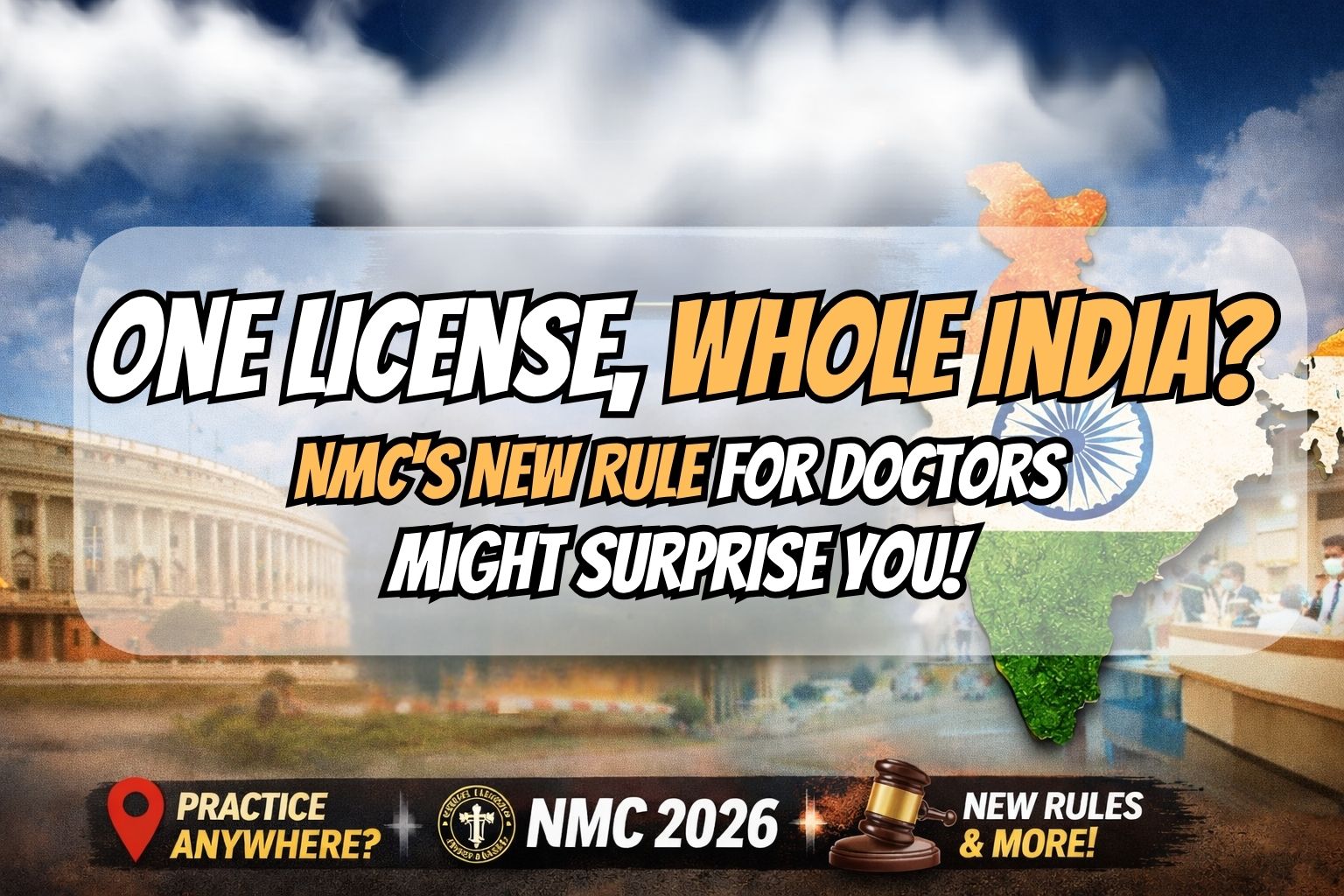
The National Medical Commission (NMC) has introduced draft amendments titled “Registration of Medical Practitioners and Licence to Practice Medicine (Amendment), Regulations, 2026”. These proposed changes aim to streamline medical licensing and bring significant clarity—especially for doctors serving in the Armed Forces Medical Services (AFMS).
This article provides a complete overview of the proposed amendments, their implications, and what they mean for medical practitioners across India.
📌 Introduction
The amendment builds upon the existing NMC Regulations 2023, focusing on improving flexibility, administrative efficiency, and nationwide practice rights for medical professionals—particularly those working under the Ministry of Defence.
🪖 Special Focus: Armed Forces Medical Services (AFMS)
One of the most important highlights of the amendment is the formal inclusion and definition of Armed Forces Medical Services (AFMS).
AFMS refers to the integrated medical system that serves:
Active armed forces personnel
Ex-servicemen
Dependents and other beneficiaries
🔑 Key Amendments Explained
1. ✅ Single-State Registration with Nationwide Practice
Doctors serving in AFMS will:
Register with one State Medical Council of their choice
Be authorized to practice across all states and union territories
👉 This removes the need for multiple registrations and simplifies mobility during service.
2. 🔄 Post-Retirement Registration Requirement
After retirement or release from service:
Doctors must either:
Register in a new state, or
Transfer their registration to the state where they plan to practice
3. 🎓 Recognition of Additional Qualifications
Any additional qualifications acquired during service:
Must be registered with the State Medical Council
Will be valid across India during AFMS service
4. ⏳ Relaxation in License Renewal
AFMS doctors will not face license inactivity due to:
Delayed renewal applications
Instead:
AFMS will submit annual records to the NMC and State Councils
👉 This ensures uninterrupted medical practice for serving personnel.
5. 🚫 No License Transfer Required During Service
AFMS doctors are exempt from:
License transfer rules between states
They are automatically authorized to practice nationwide based on service obligations.
6. ⚖️ New Rule: Jurisdiction in Misconduct Cases (Regulation 10A)
In cases of alleged medical negligence or professional misconduct:
The State Medical Council where the doctor is registered will:
Take final action
If the incident occurs in another state:
That state can:
Conduct investigation
Send recommendations to the registration state
Additionally:
Armed Forces authorities may take separate disciplinary action under military laws
📢 Public Participation & Feedback
These amendments are currently in draft stage.
Stakeholders and the public can:
Submit objections or suggestions
Timeline:
Within 30 days from publication
Mode:
Only via official email (as specified by NMC)
📊 Overall Impact of the Amendment
The proposed regulations aim to:
✔️ Simplify licensing procedures for AFMS doctors
✔️ Enable seamless nationwide practice
✔️ Reduce bureaucratic hurdles
✔️ Maintain accountability through defined jurisdiction rules
✔️ Improve coordination between State Medical Councils and NMC
🏁 Conclusion
The NMC Amendment Regulations 2026 represent a progressive step toward modernizing India’s medical licensing framework. By addressing the unique needs of Armed Forces doctors while maintaining regulatory oversight, the amendment ensures both flexibility and accountability in medical practice.
Once finalized, these changes are expected to significantly benefit healthcare delivery within the Armed Forces and beyond.